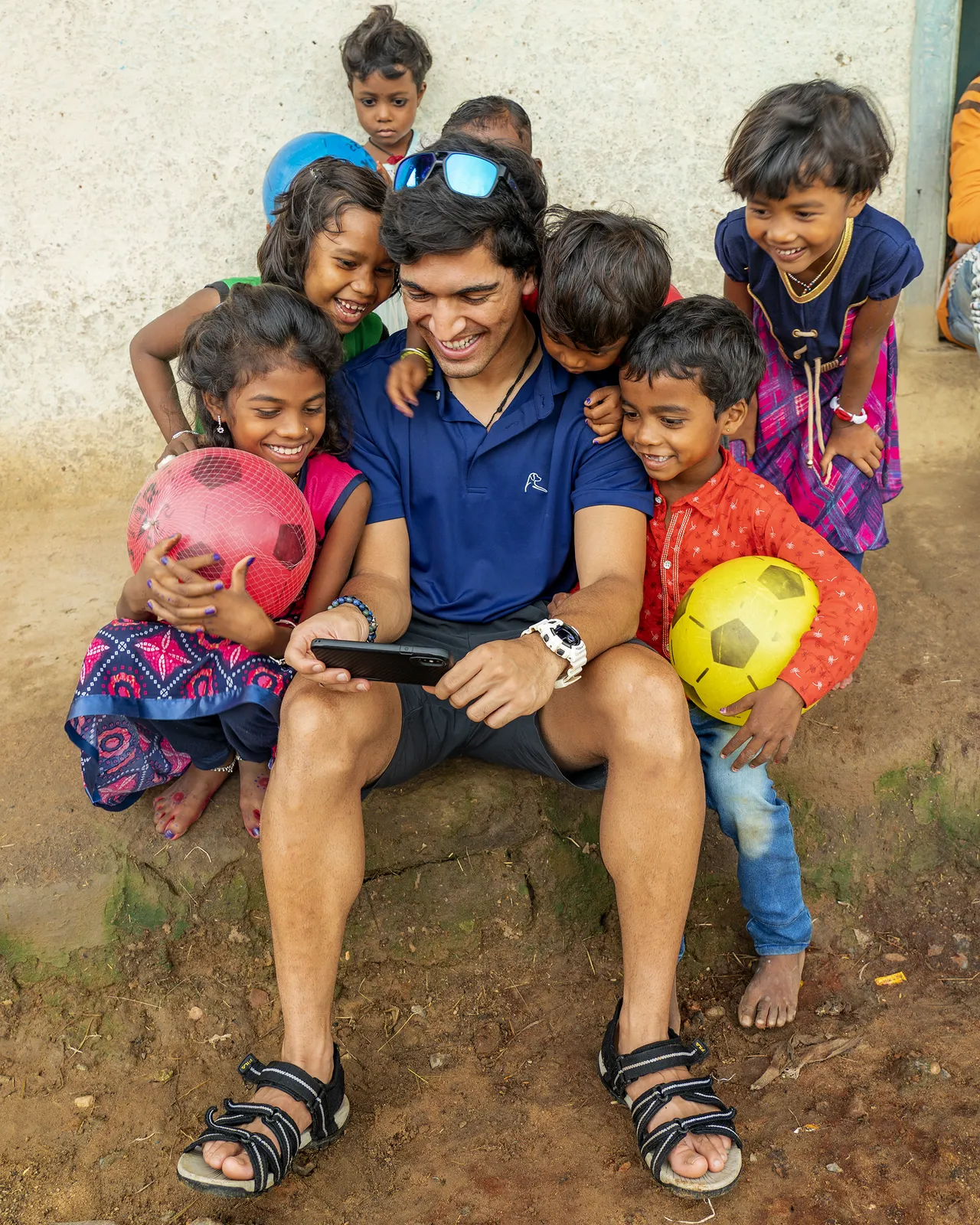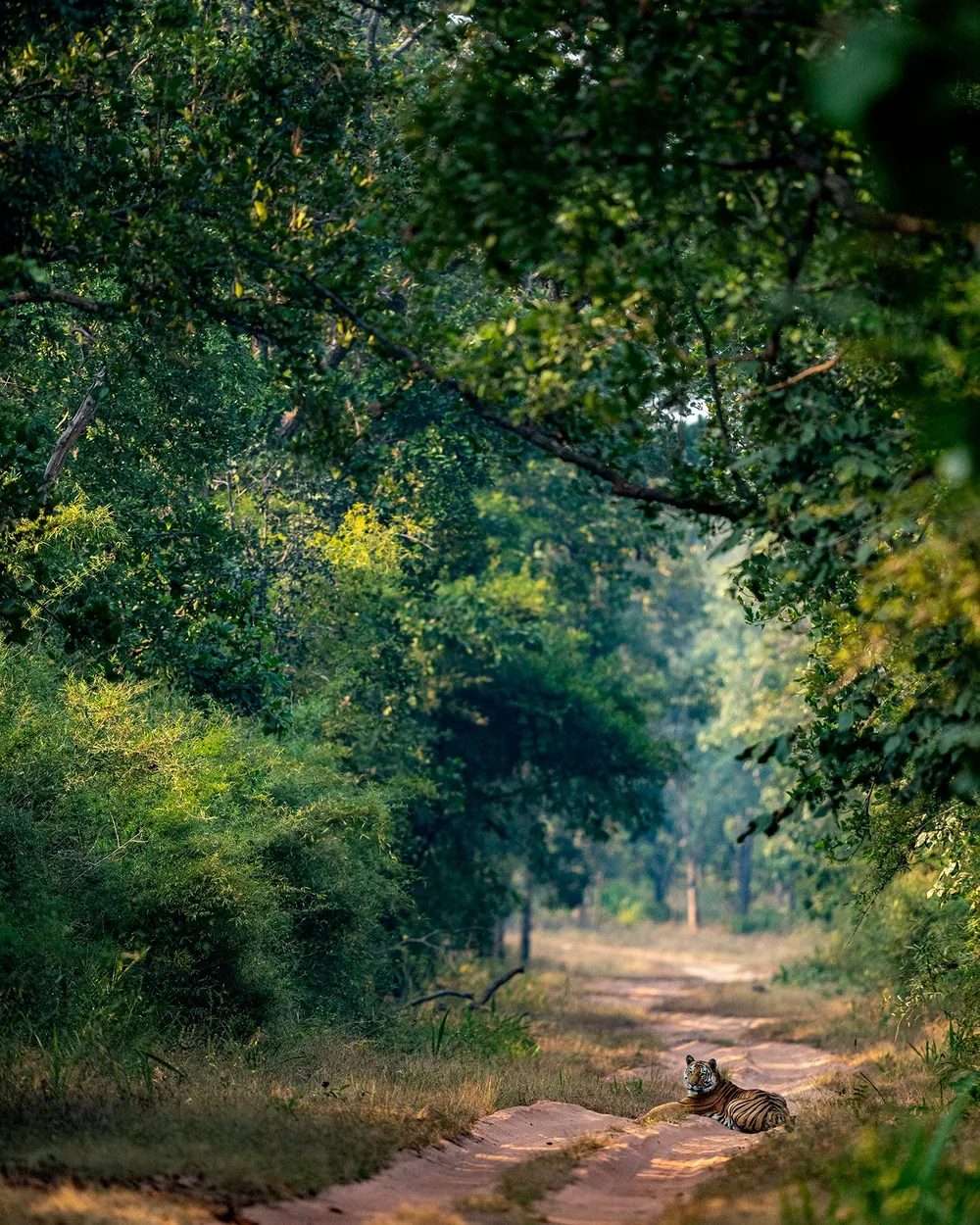
Over 1400 tigers are living beyond protected areas — which leads to human-wildlife conflict and ends with cases of poisoning, being beaten to death, and poaching.
What if dispersing tigers didn’t have to leave the forest only to enter danger? What if there was safe habitat beyond the reserve?
That question became the beginning of this project.
50%
tigers actively hunt cattle regularly – bringing them in conflict with humans.
35%
of tigers live outside protected areas in India – that’s well over 1,400 individuals.
Pilot project in the outskirts of Bandhavgarh National Park
Madhya Pradesh – Central India
Rewilding – 101
Can a degraded farmland be restored into a functioning wildlife habitat?
Across the parks of India, farmland is typically acquired for one of three reasons: more agriculture, commercial development, or to build tourism infrastructure & wildlife resorts. Very rarely is land deliberately acquired with the sole purpose of returning it to nature.
We wanted to test a different model: buy degraded farmland, actively restore it, protect it, rejuvenate it, and see if wildlife will return.
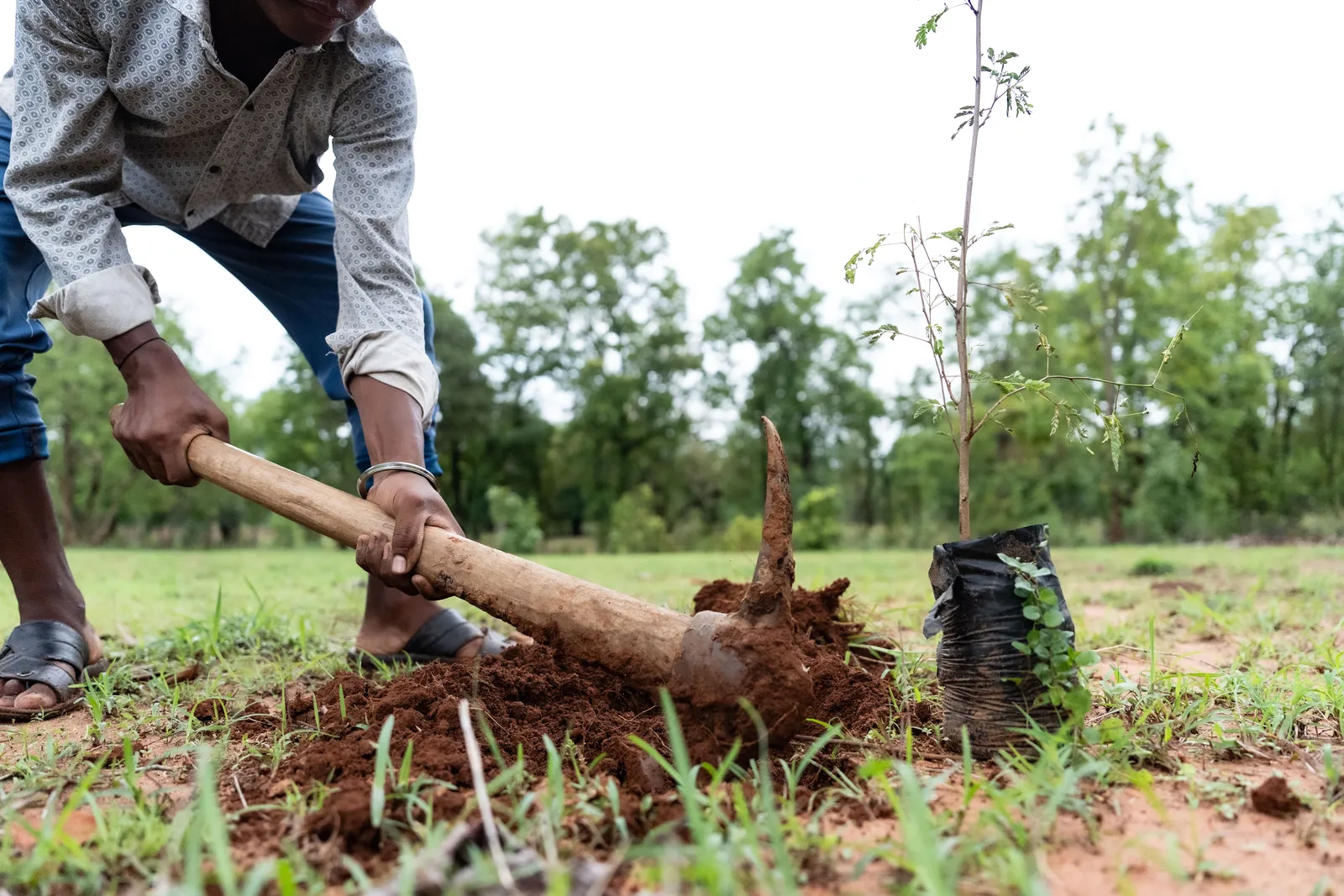
We got to work!
In the outskirts of Bandhavgarh we purchased a millet farm, heavily degraded and heavily grazed.
The first step was protecting the land from continued cattle grazing and human activity.
A boundary fence was installed around the property, but deliberately kept low enough for wildlife to move freely through the landscape.
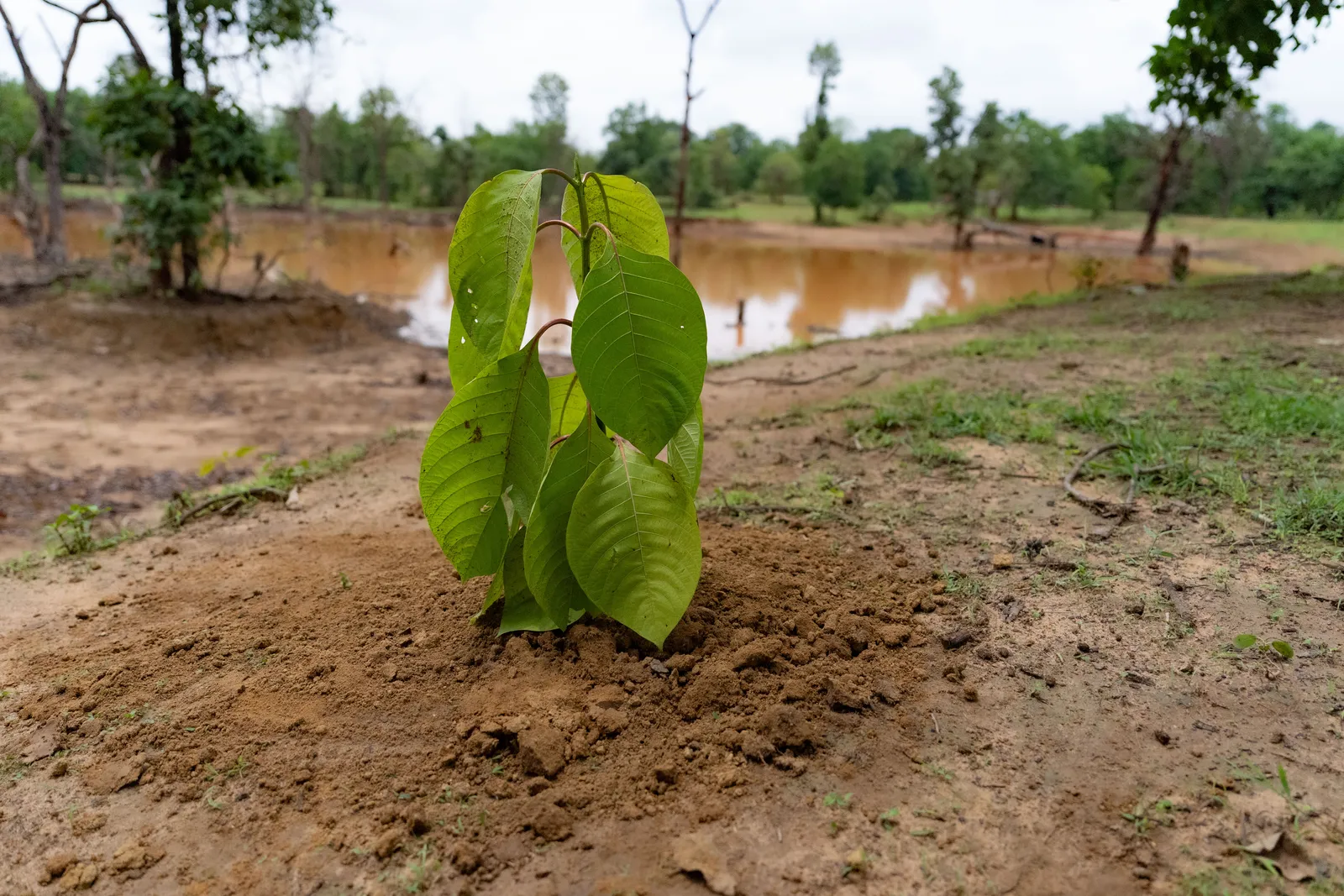
Building the ecosystem
- First a large waterhole created – one that would recharge the ground water of a heavily farmed land. First it was fed by a solar water-pump, but after the first monsoons, it became a naturally fed waterhole. Only requiring pumping in peak summers.
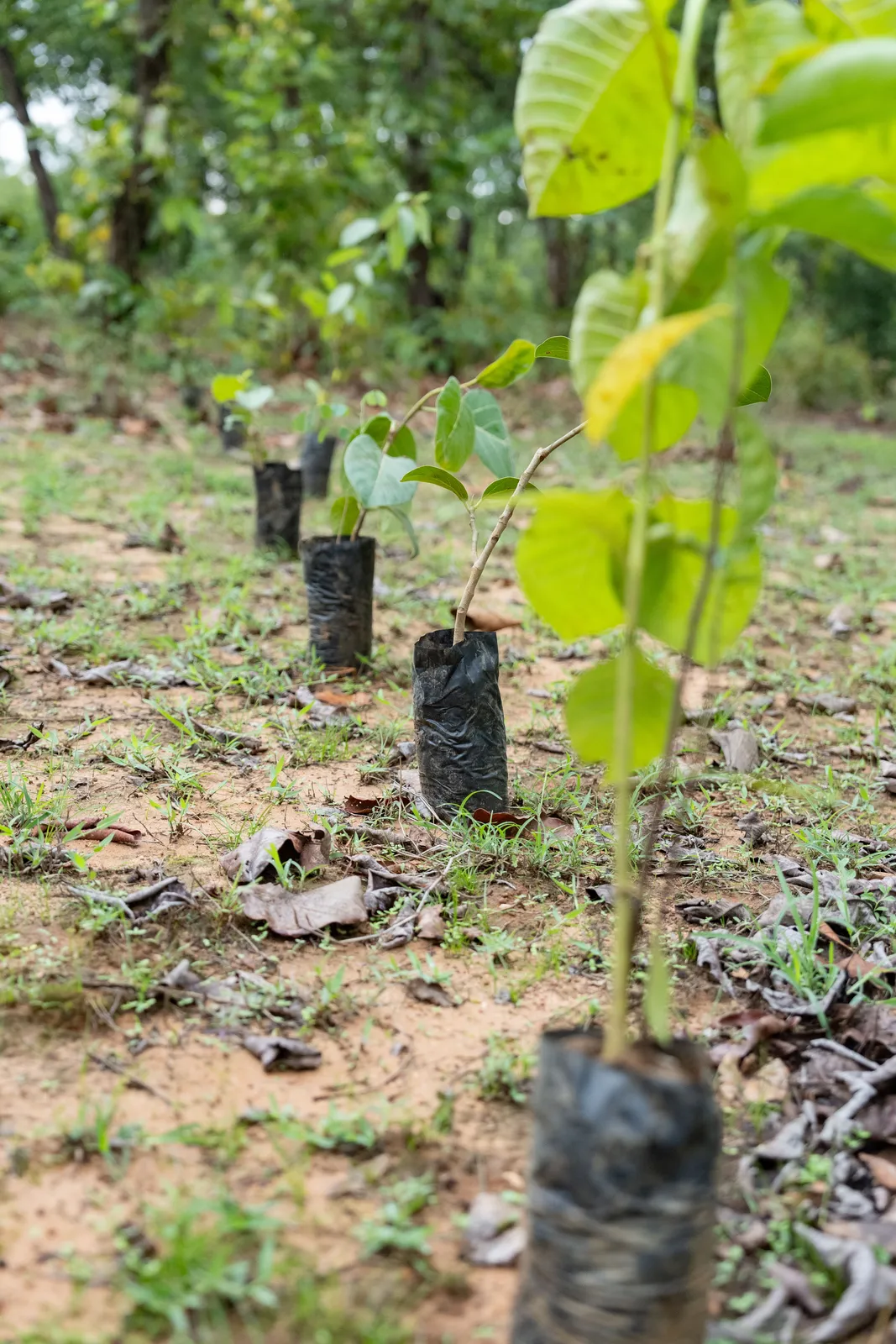
- Then ~1,000 native trees planted
- Followed by ~20 kg of grass seeds sown
The objective was to rebuild the vegetation that had been depleted through years of logging, cultivation and grazing. Trees would provide shade, cover and long-term habitat. Grass would provide food and shelter for herbivores. What was great about this place was the fact that it had a good number of old trees still standing – mostly mahua, banyan and palash which locals don’t cut due to their value and auspicious reasons. The trees helped us jump-start the ecosystem.
Protecting what we restored
A monitoring camp was established on the land, with a dedicated person – hired from the nearby village – monitoring the land and ensuring that the restored area remained protected. Watching for signs of wildlife. Monitoring threats. Maintaining the fencing – which was only up-to 4 feet preventing cattle but allowing wildlife to jump in easily or to pass under it.
The first signs of new life
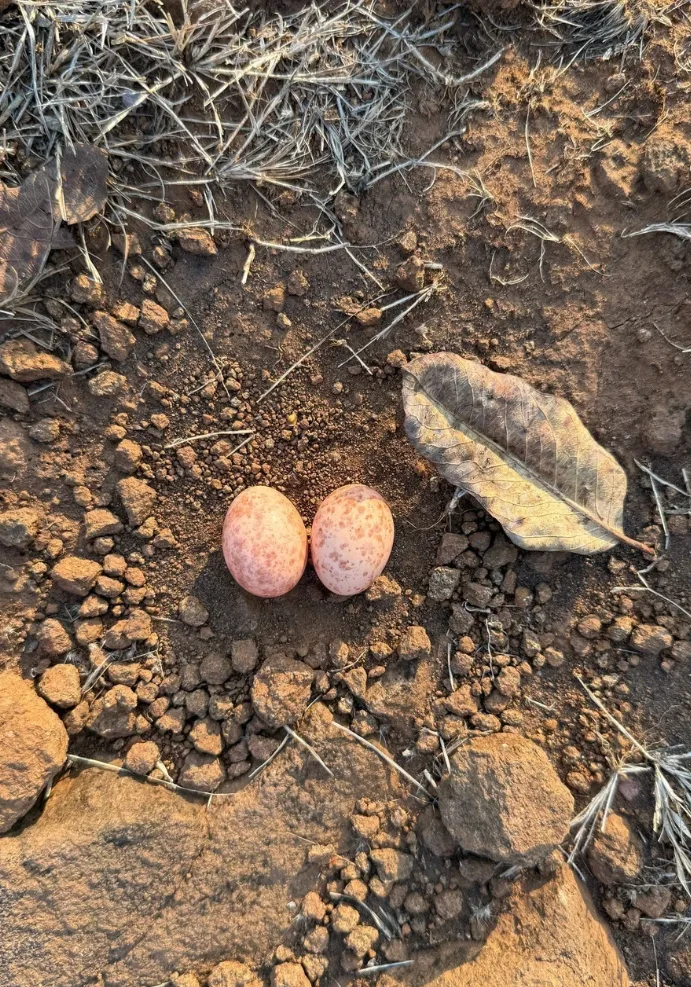
Within weeks, birds began moving back into the land. Among the first were ground-dwelling species like lapwings and nightjars. But one sign stood out as a clear indicator of the efforts coming to life – the nightjars began laying their eggs directly on the ground.
For a species that nests on the ground, this was a powerful indication that the land had become quiet and undisturbed enough for them to breed.
The ecosystem was beginning to trust the land again.
Documenting & studying the progress
Trail cameras
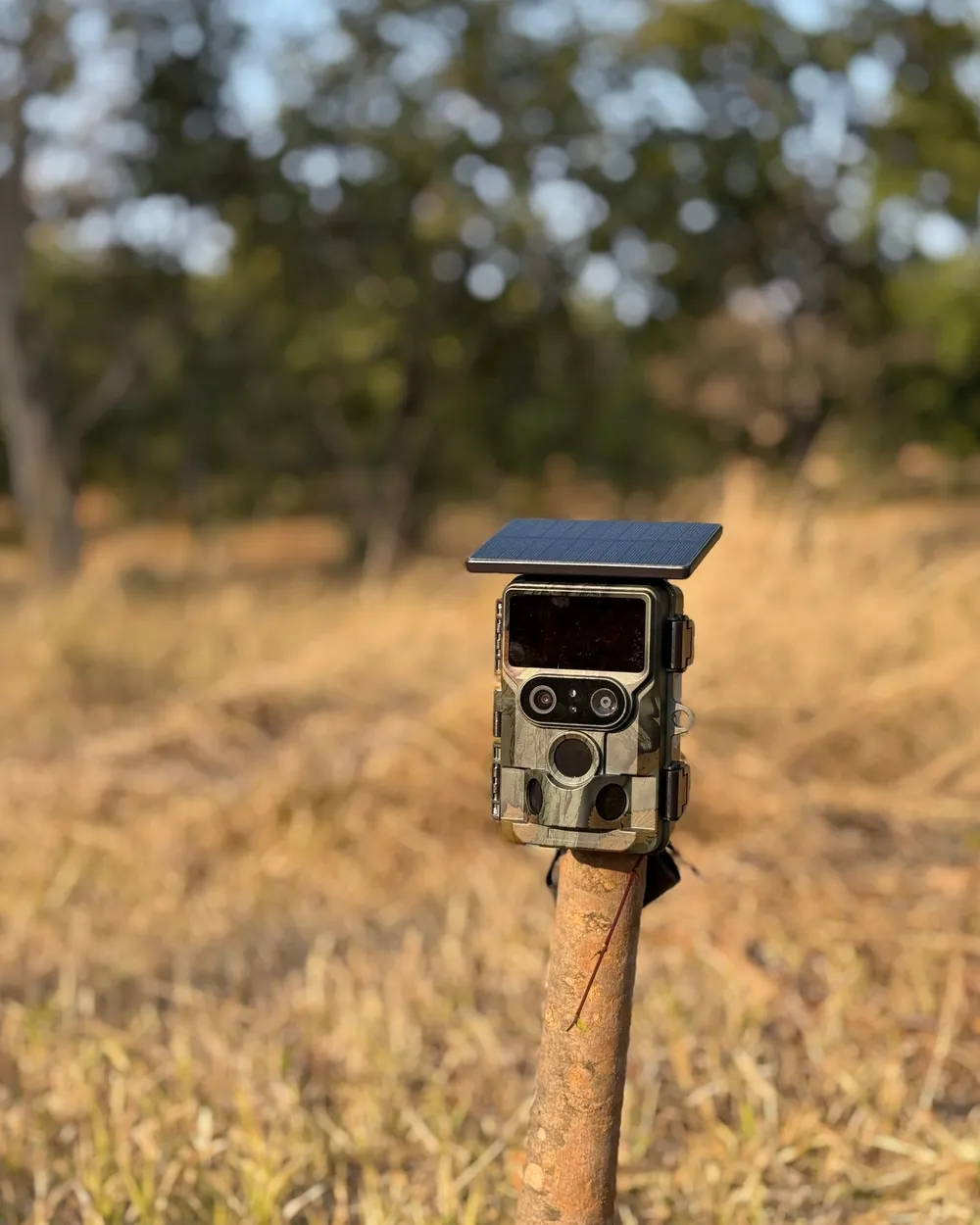
14 trail cameras were installed across the land to continuously document wildlife movement and understand how the habitat was being used.
The trail cameras were self sustaining solar powered units requiring no monitoring.
They recorded anything that walked or moved in front of it.
Track impression pads
Small areas of soft, fine sand were prepared at strategic locations so that animals and birds walking across them would leave clear footprints.
These tracks could then be photographed and identified to understand which species were using the land and how wildlife movement changed over time.
First rains – the habitat begins to transform
The Indian monsoon are pure magic. Three months of rain completely transformed the landscape that, only months earlier, looked completely dry, barren and lifeless.
And when the rains finally passed, the post-monsoon rejuvenation was beyond anything I had imagined. The grass came alive. It was tall, thick and lush green.
The return of game
Slowly, the trail cameras began to tell a story. The first visitor was a barking deer.
Then came mongoose and civet. Then chital deer. One species became several. The land that had once been heavily grazed farmland was beginning to serve as a wildlife habitat again.
Soon after the prey… came the predators
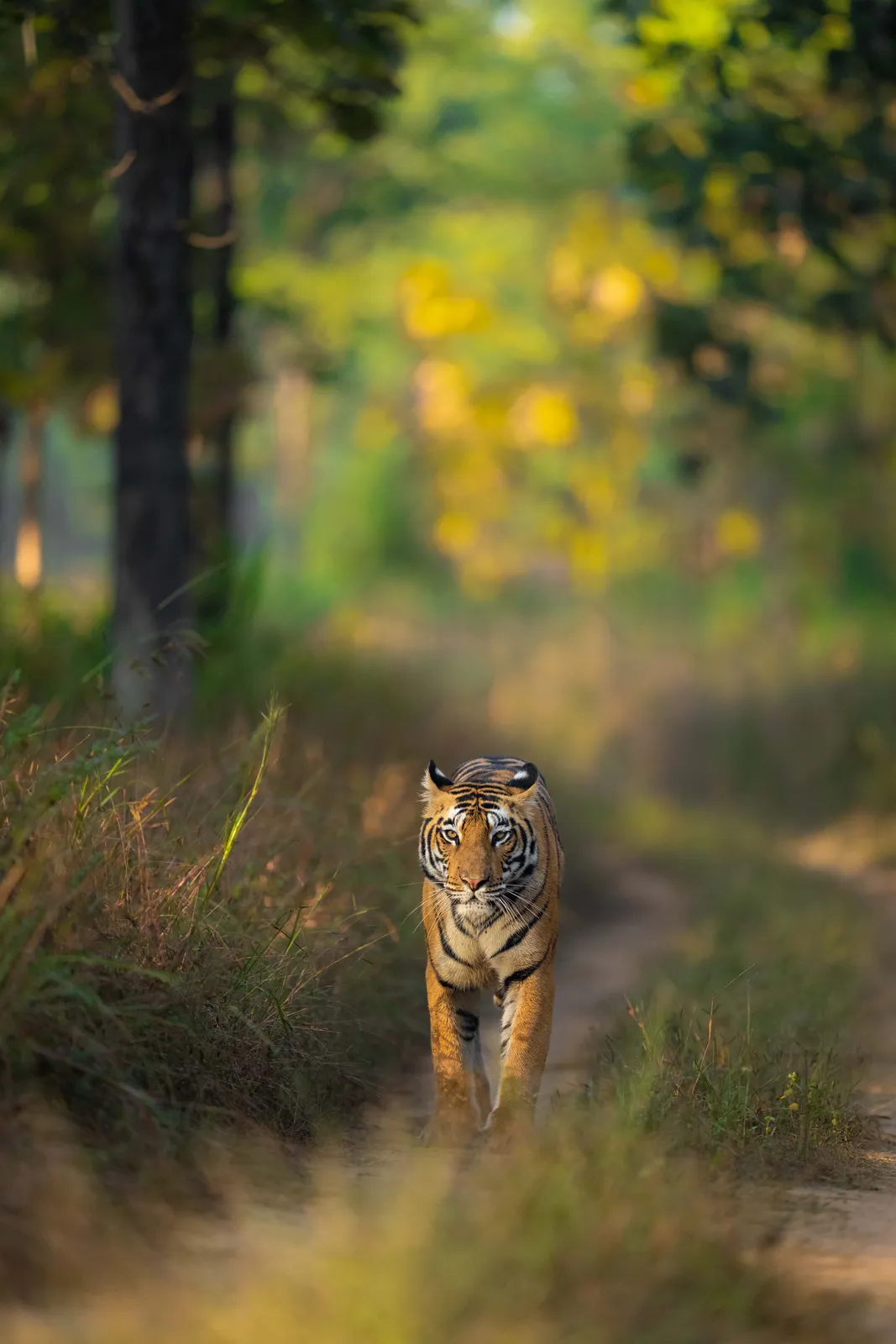
A sloth bear appeared, and then began returning every few days. Soon after, a male leopard appeared, and finally, a tigress. All three predators reappeared on the trail cameras at least once every two weeks. The tigress even began marking the land, scraping the ground and scent-marking to establish her presence. But the most incredible moment came when one of the cameras recorded her roaring, announcing her presence loud and clear and letting every other animal know that this area was now hers.
From farm-land to a conservancy
The pilot demonstrated something we had only hoped to prove: when you restore vegetation, provide water, remove grazing pressure and protect the land, wildlife can find its way back. We didn’t have to bring the wildlife in.
We simply created suitable habitat, and nature did the rest.